What are you doing this week?
9 points by caius
9 points by caius
What are you doing this week? Feel free to share!
Keep in mind it’s OK to do nothing at all, too.
Still trying to find a job…
Same, same. Been looking on and off since January. I'm too mid-level and unimpressive for anyone to hire me in this climate.
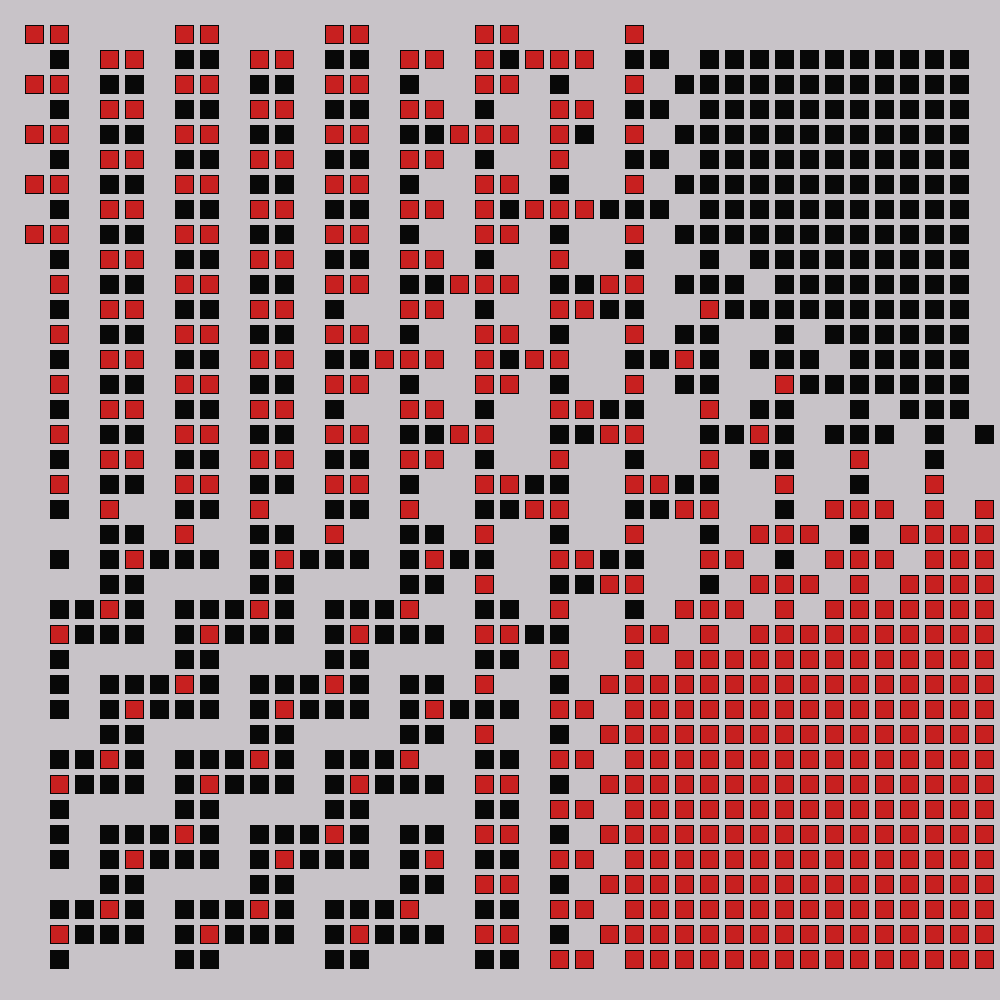
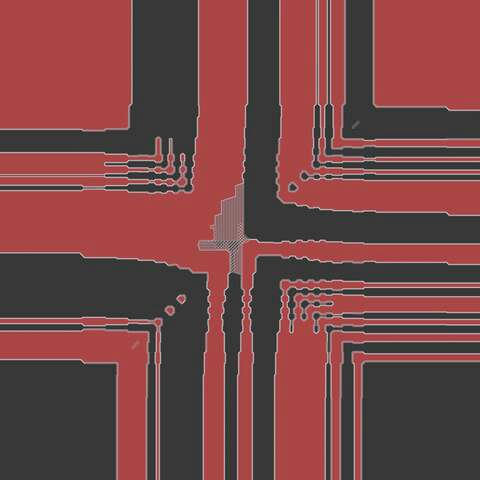
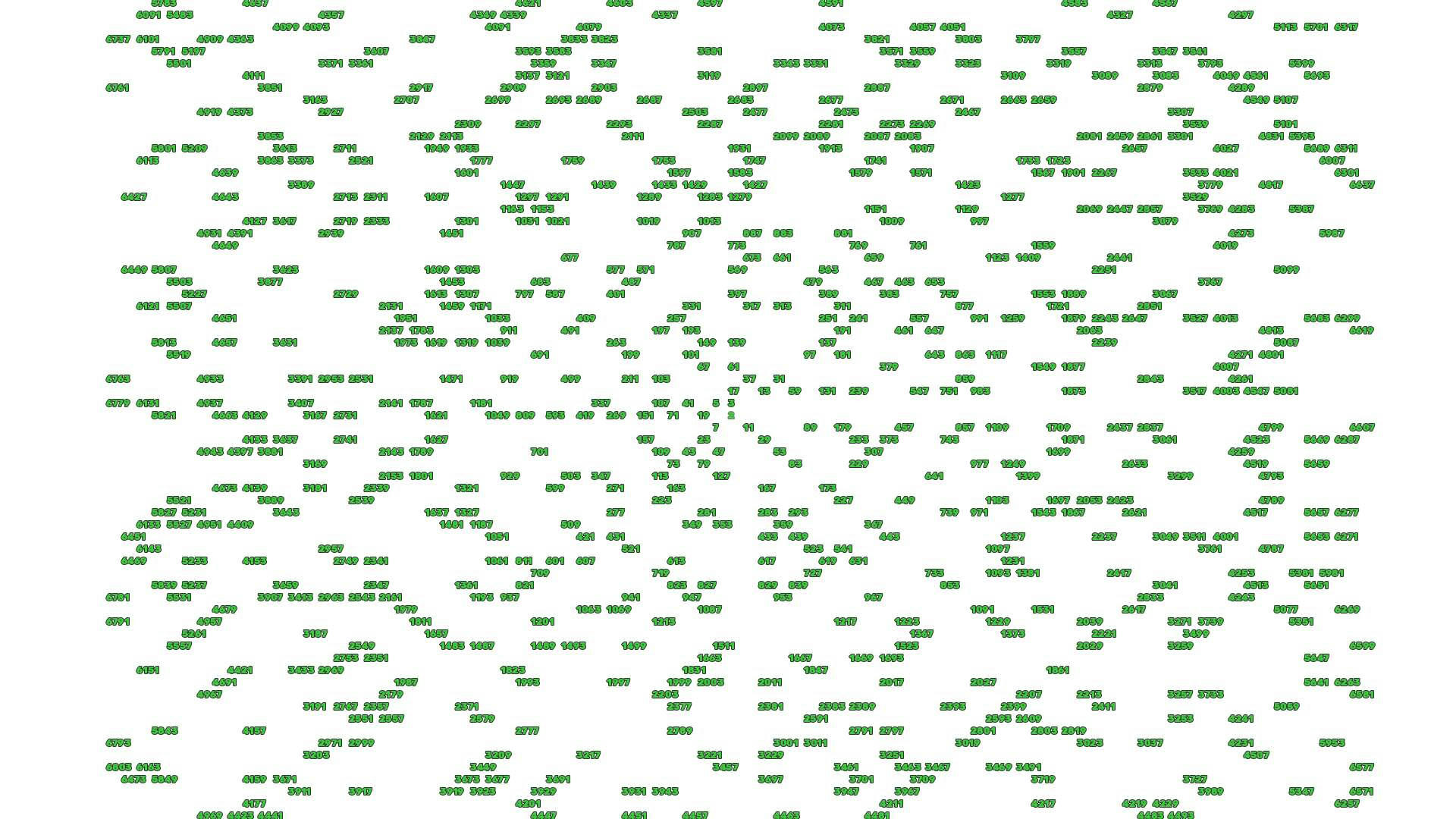
In between boring stuff and chores, I've been working through an implementation of the Red & Black knights pattern recently featured on Numberphile. It's a relatively simple implementation but seeing the patterns take shape has been fun, and seeing the 1 million pattern match was gratifying.
This week my plan is to make the data representations a little more efficient, the underlying number spiral generation a little faster, and perhaps have additional representations (eg video); after those are ticked off, extending to other patterns -- additional colors, different pieces or other rules -- comes next.
My motivation was experiencing the same kind of wonder Neil Sloane showed in the video, on seeing chaos fall into order; very reminiscient to me of cellular automata, which I'd also like explore at some point. Math videos like Numberphile, 3blue1brown & co have a wonderful way of making the inaccessible accessible- passing things down carefully from a high shelf; in this case, the pattern was on a shelf I could just about reach.
As a bonus, Ulam spirals fall out :)
Very interesting!
My intuition is that the this is basically a cellular automata with non-local nearest neighbor. The non-local nature means that, far enough away from center, the neighbors are basically random, with some distribution based on the mean occurrence of each color, maybe localized to some larger block region.
If this intuition holds, then this might explain the regions of solid. It basically is an absorbing state, where neighbors push the color in one direction or another until it gets into a fully colored state and stays there. For multicolored knights that have periodic/spiral like patterns, this might be because the attack pattern in a local block don't have an absorbing state. If they do, then this might mean the spiral will settle down to a solid color partitioned like the two color state...and maybe one can get a handle on how long this would take based on some local block with randomized edge conditions.
It'd be interesting to know if there's a way to get a completely single colored plane on the outer periphery with some non-uniform initial condition around the origin (for two knights, say), or whether they need to always have two colors. Also interesting to see if the periodic spirals can be made to be periodic with some initial condition around the origin.
Thanks for sharing your insight wrt the relation to cellular automata; it's interesting that you think it's directly comparable to a cellular automaton. I get what you're saying about non-local nearest neighbors; the spiral grows regularly, which will give -- I think! -- entirely predictable distributions of neighbors, though I haven't yet checked the OEIS for related sequences as I am building it from the ground up and trying to come up with some of the insights myself before going to spoilers. Despite that apparent regularity I think you're right that from a single position its eight knights-move neighbors will seem random.
I wondered if the block regions could be explainable from an additive 'zone of control' perspective- once a sufficient boundary is established the block perpetuates (Neil Sloane said the edge monocolor blocks go on forever if I remember correctly). I may be repeating what you already expressed about absorbing states; I lack the precise terminology alas.
Apropos of your comment, added to the future plans of alternate presentations is running the algorithm on non-spiral grids to see how that affects pattern formation. I had wondered about probabilistic placements as well -- eg for placing a knight, have some probability that the knight is 'blocked' for a particular square/cell/number -- and I have some code in place to do this, but I'd like to formalise that. Manually modulating initial conditions could be interesting too- I wonder if all four 'corners' could have the same repeating color, confining the other color to bands...
Thanks for your thoughts, glad this resonated with someone :)
$WORK: migrating deployment pipelines from azure to github $HOME: finishing touches on the garage gym
I’m working on Sevenfall, a small browser tangram puzzle game: arrange the seven classic pieces into target silhouettes.
The part I’ve spent most time on this week is making the geometry feel less frustrating: edge/point snapping, tolerant shape matching, and shareable puzzle links. It’s built with Phaser, with polygon clipping for solve detection.
Playable prototype: https://chunq.itch.io/sevenfall
I’d be interested in feedback on the puzzle feel, especially whether the snapping/matching feels helpful or too permissive.
Macros are just functions that have code as input and code as output. Another thing that has code as input and code as output are compilers. I'm implementing a compiler for the actor-oriented uFork CPU as a set of macros (in my own language that compiles to x86) as an experiment on what is currently lacking for my macro system.
This week i'm going to try to improve the mobile experience for Abject (https://abject.world). I currently have a mobile experience but I'm not happy with it as it's a little clunky to use.
personal: some IT infra needs some care and another attempt at getting sport integrated into a weekly rhythm. I might find some time to spend on 2 personal projects that I have neglected the past months.
work: pondering again what "change management" in practice really means and how you integrate it in an operational devops environment. To have some fun, see on how I can extend the CI/CD testing framework.
My city is having a tech week and DIG South is in town, but I don't have $500 or the time off to go. There's some free and open sessions at night I might try to attend.
I'm just going to dork around with some random tech and try to have fun making a bunch of little projects. I've been playing around a bunch with sizeBench and x64dbg learning more about COFF binaries, but not sure where I'm going with any of it. Also, apparently I didn't set up /boot/efi with enough space and zypper dup on my new opensuse box needs more space for kernel updates, so figuring out how to fix that, or just wiping the box and starting over.
work: trying to not explode, as I've got tight deadline this friday and we've got small welcome party for a new team member this Thursday
personal: I'll try to restore OS on my friend's old phone, because Xiaomi decided to self-destroy itself. I've figured out what I have to do, but not exactly how and what tools I need to use except firehose loader. And of course they didn't have backups. I hope it won't clear the encryption keys